Bemakers Case study
8
European markets launched
200+
Beverage brands supported
0 to 1
Built the product suite and brand around it
Selling alcohol across borders is not simple. It involves inventory, logistics, taxation, customs, compliance, payments and reporting. Every market has different rules. Every order creates new requirements.
When I joined Bemakers there was no product. A deck, a vision and a couple of founders with industry knowledge and early validation. Over the next five years I built the product suite and the brand from the ground up as Bemakers’ design function.
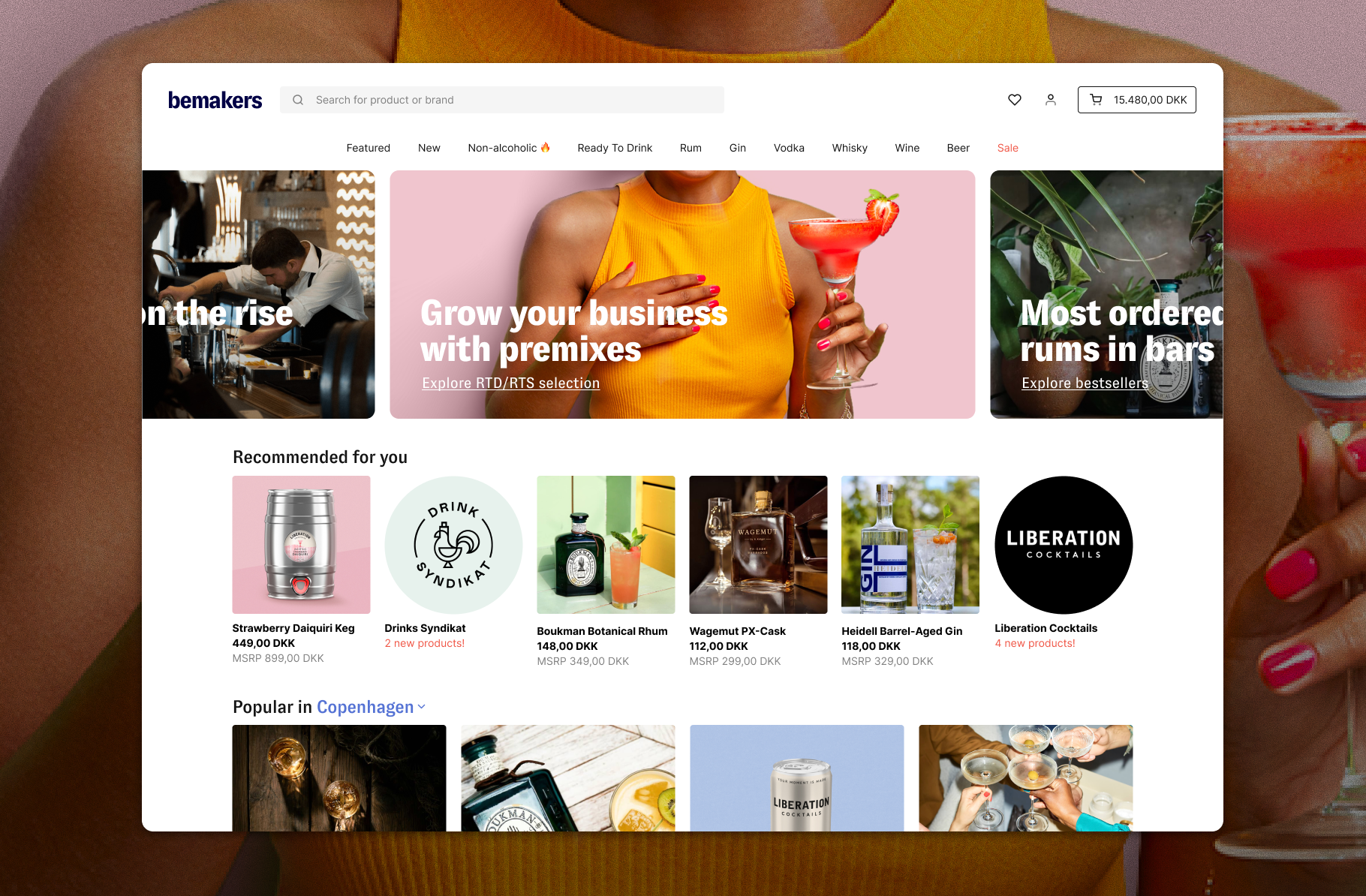
The brands we served were mostly stuck behind classic importers. They had little control of their own cashflow and no direct line to the market. The ambition was to change that: give them a webshop, direct access to their customers, and handle all the legal and operational machinery underneath. Simple on paper, hiding an enormous amount of complexity.
The experience was never in the platform
The thing I kept relearning is that the user experience didn't live in the screens. It lived in the ecosystem around them.
Selling and distributing alcohol - regulated as both food and alcohol - drags a long tail of manual, distributed, genuinely confusing work behind it. Customs forms, excise duties, market-by-market reporting, most of it invisible until it goes wrong. The product's job wasn't to render that complexity nicely. It was to absorb it. Take care of the boring, load-bearing stuff so a small brand could concentrate on the part that matters to them: making and selling something good.
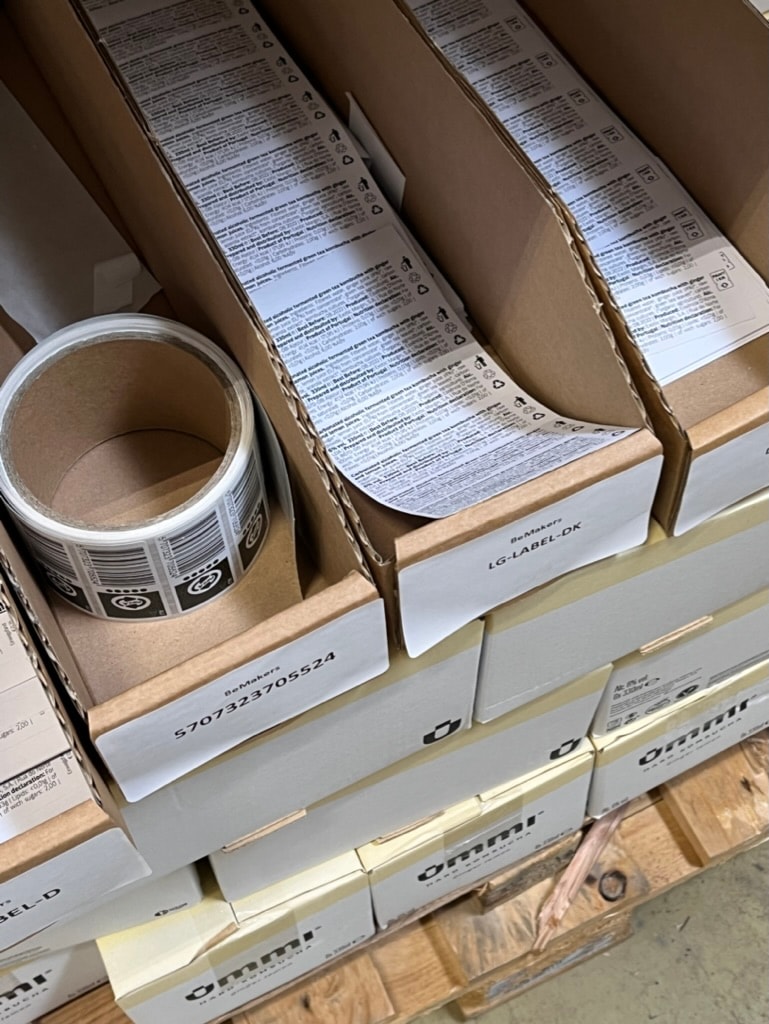
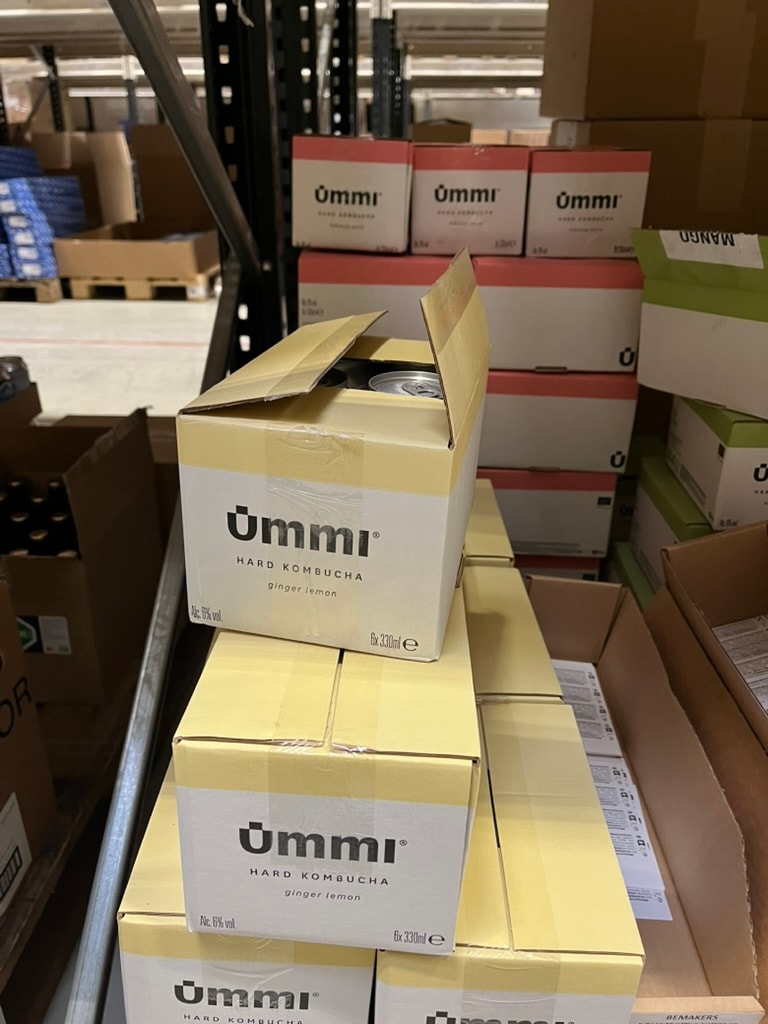
The reality of the producers is labels, visits from the authorities, reporting, customs, and everything in between. The platform set out to handle just that.
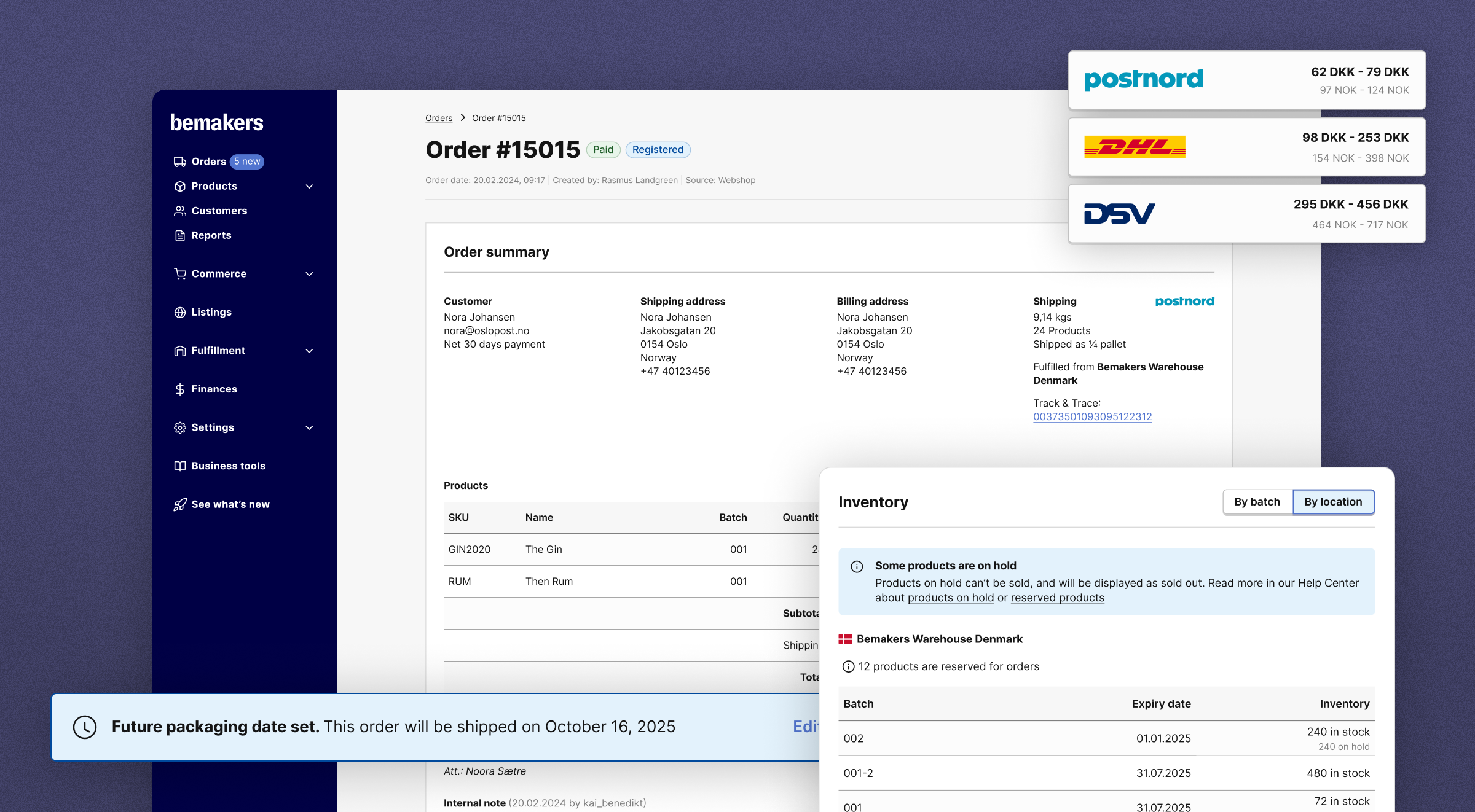
Designing for customer number 200
Building for the first customer fits like a glove. Building something that still makes sense for the two-hundredth though... different country, different tax law, a channel the first never touched - that’s the actual work.
I kept that honest by staying close to the people using Bemakers; over a hundred customer interviews (same amount when building Beagle with Podio I recall). It wasn’t usability testing, but customer development: understanding the business and the friction behind the screen. Building for the first customer fits like a glove. Building something that still makes sense for the two-hundredth — a different country, different tax law, a channel the first never touched — is the actual work.
It’s a different design problem than laying out a dashboard. It was about making a fractured journey legible from end to end.
A tool that works, and a shop that sells
There were two products in one platform, pulling in opposite directions. The operational side needed to be utilitarian and trusted, fast for people doing serious work where mistakes cost money. The commercial side needed to feel like a good place to buy.
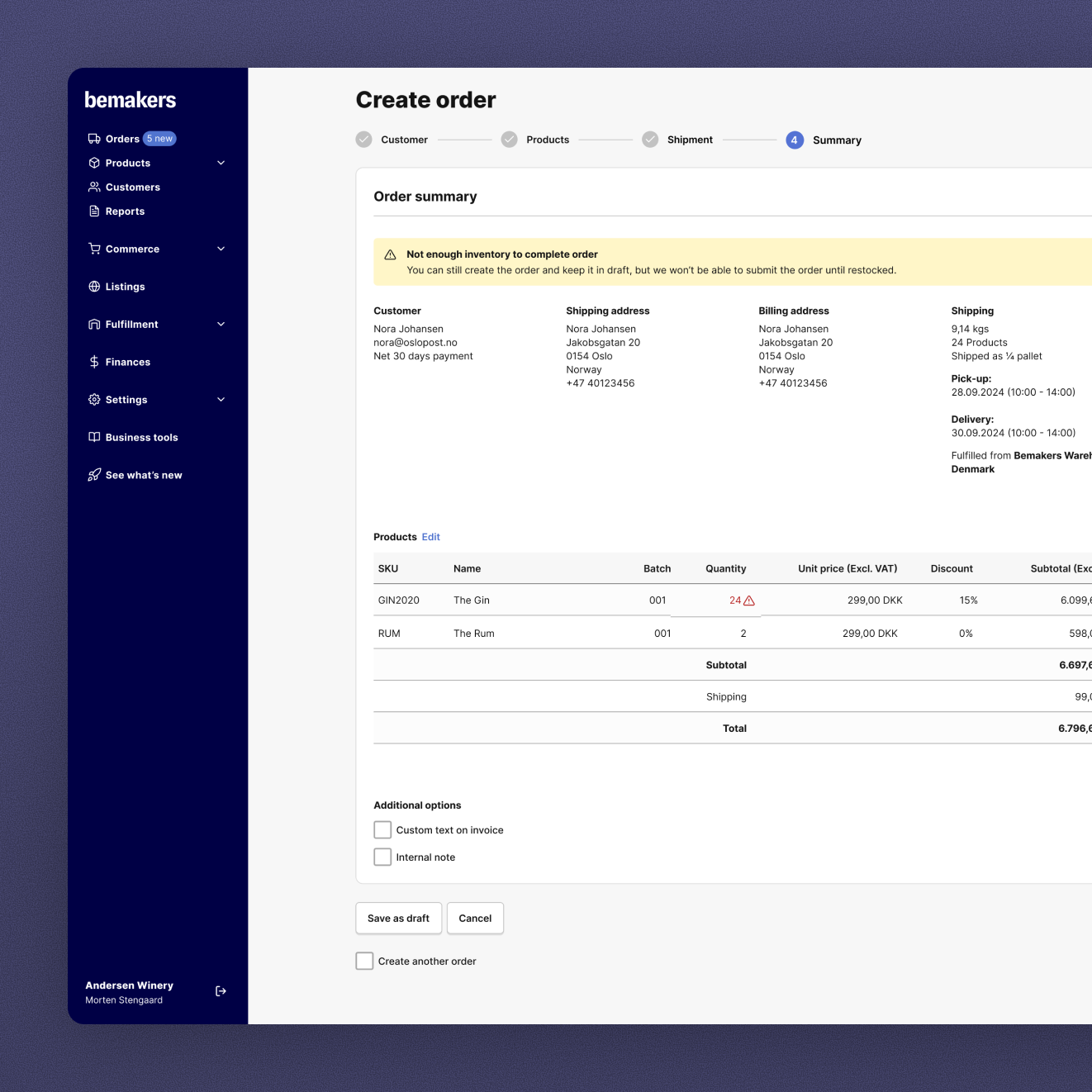
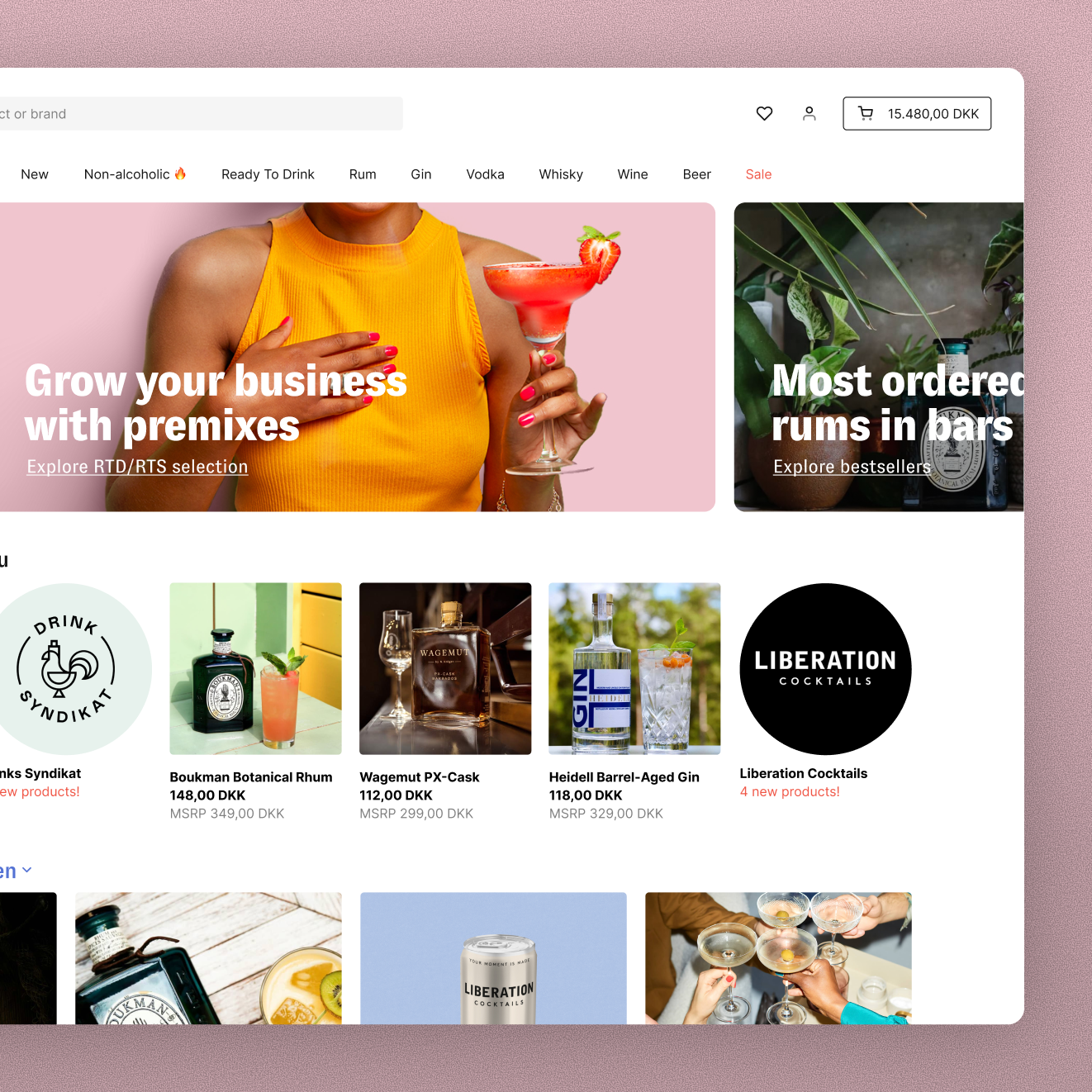
That duality mirrored the customers themselves - people running a tight, compliant operation who genuinely wanted to be in the beverage business. Serious in the back, ambitious and approachable in the front (that’s also a haircut I think). It became the thing I steered by.
What it added up to
Bemakers went from a PowerPoint to a platform that 200+ international brands run on across eight markets - brands that used to depend on importers and manual processes now selling directly, with control of their own cashflow.
For many of them there wasn't a slightly-worse version before. There was nothing. A binary before and after. That's rare, and it's the part I'm proudest of.
Bemakers Case study
Building the operational backbone for modern beverage companies. Order management, inventory, logistics, finance and e-commerce in one connected platform.
8
European markets launched
200+
Beverage brands supported
0 to 1
Built the product suite and brand around it
Selling alcohol across borders is not simple. It involves inventory, logistics, taxation, customs, compliance, payments and reporting. Every market has different rules. Every order creates new requirements.
When I joined Bemakers there was no product. A deck, a vision and a couple of founders with industry knowledge and early validation. Over the next five years I built the product suite and the brand from the ground up as Bemakers’ design function.
The brands we served were mostly stuck behind classic importers. They had little control of their own cashflow and no direct line to the market. The ambition was to change that: give them a webshop, direct access to their customers, and handle all the legal and operational machinery underneath. Simple on paper, hiding an enormous amount of complexity.
The experience was never in the platform
The thing I kept relearning is that the user experience didn't live in the screens. It lived in the ecosystem around them.
Selling and distributing alcohol - regulated as both food and alcohol - drags a long tail of manual, distributed, genuinely confusing work behind it. Customs forms, excise duties, market-by-market reporting, most of it invisible until it goes wrong. The product's job wasn't to render that complexity nicely. It was to absorb it. Take care of the boring, load-bearing stuff so a small brand could concentrate on the part that matters to them: making and selling something good.
The reality of the producers is labels, visits from the authorities, reporting, customs, and everything in between. The platform set out to handle just that.
Designing for customer number 200
Building for the first customer fits like a glove. Building something that still makes sense for the two-hundredth though... different country, different tax law, a channel the first never touched - that’s the actual work.
I kept that honest by staying close to the people using Bemakers; over a hundred customer interviews (same amount when building Beagle with Podio I recall). It wasn’t usability testing, but customer development: understanding the business and the friction behind the screen. Building for the first customer fits like a glove. Building something that still makes sense for the two-hundredth — a different country, different tax law, a channel the first never touched — is the actual work.
It’s a different design problem than laying out a dashboard. It was about making a fractured journey legible from end to end.
A tool that works, and a shop that sells
There were two products in one platform, pulling in opposite directions. The operational side needed to be utilitarian and trusted, fast for people doing serious work where mistakes cost money. The commercial side needed to feel like a good place to buy.
That duality mirrored the customers themselves - people running a tight, compliant operation who genuinely wanted to be in the beverage business. Serious in the back, ambitious and approachable in the front (that’s also a haircut I think). It became the thing I steered by.
What it added up to
Bemakers went from a PowerPoint to a platform that 200+ international brands run on across eight markets - brands that used to depend on importers and manual processes now selling directly, with control of their own cashflow.
For many of them there wasn't a slightly-worse version before. There was nothing. A binary before and after. That's rare, and it's the part I'm proudest of.
Bemakers Case study
Building the operational backbone for modern beverage companies. Order management, inventory, logistics, finance and e-commerce in one connected platform.
Impact
8
European markets launched
200+
Beverage brands supported
0 to 1
Built the product suite and brand around it
Selling alcohol across borders is not simple. It involves inventory, logistics, taxation, customs, compliance, payments and reporting. Every market has different rules. Every order creates new requirements.
When I joined Bemakers there was no product. A deck, a vision and a couple of founders with industry knowledge and early validation. Over the next five years I built the product suite and the brand from the ground up as Bemakers’ design function.
The brands we served were mostly stuck behind classic importers. They had little control of their own cashflow and no direct line to the market. The ambition was to change that: give them a webshop, direct access to their customers, and handle all the legal and operational machinery underneath. Simple on paper, hiding an enormous amount of complexity.
The experience was never in the platform
The thing I kept relearning is that the user experience didn't live in the screens. It lived in the ecosystem around them.
Selling and distributing alcohol - regulated as both food and alcohol - drags a long tail of manual, distributed, genuinely confusing work behind it. Customs forms, excise duties, market-by-market reporting, most of it invisible until it goes wrong. The product's job wasn't to render that complexity nicely. It was to absorb it. Take care of the boring, load-bearing stuff so a small brand could concentrate on the part that matters to them: making and selling something good.
The reality of the producers is labels, visits from the authorities, reporting, customs, and everything in between. The platform set out to handle just that.
Designing for customer number 200
Building for the first customer fits like a glove. Building something that still makes sense for the two-hundredth though... different country, different tax law, a channel the first never touched - that’s the actual work.
I kept that honest by staying close to the people using Bemakers; over a hundred customer interviews. It wasn’t usability testing, but customer development: understanding the business and the friction behind the screen.
It’s a different design problem than laying out a dashboard. It was about making a fractured journey legible from end to end.
A tool that works, and a shop that sells
There were two products in one platform, pulling in opposite directions. The operational side needed to be utilitarian and trusted, fast for people doing serious work where mistakes cost money. The commercial side needed to feel like a good place to buy.
That duality mirrored the customers themselves - people running a tight, compliant operation who genuinely wanted to be in the beverage business. Serious in the back, ambitious and approachable in the front (that’s also a haircut I think). It became the thing I steered by.
What it added up to
Bemakers went from a PowerPoint to a platform that 200+ international brands run on across eight markets - brands that used to depend on importers and manual processes now selling directly, with control of their own cashflow.
For many of them there wasn't a slightly-worse version before. There was nothing. A binary before and after. That's rare, and it's the part I'm proudest of.